
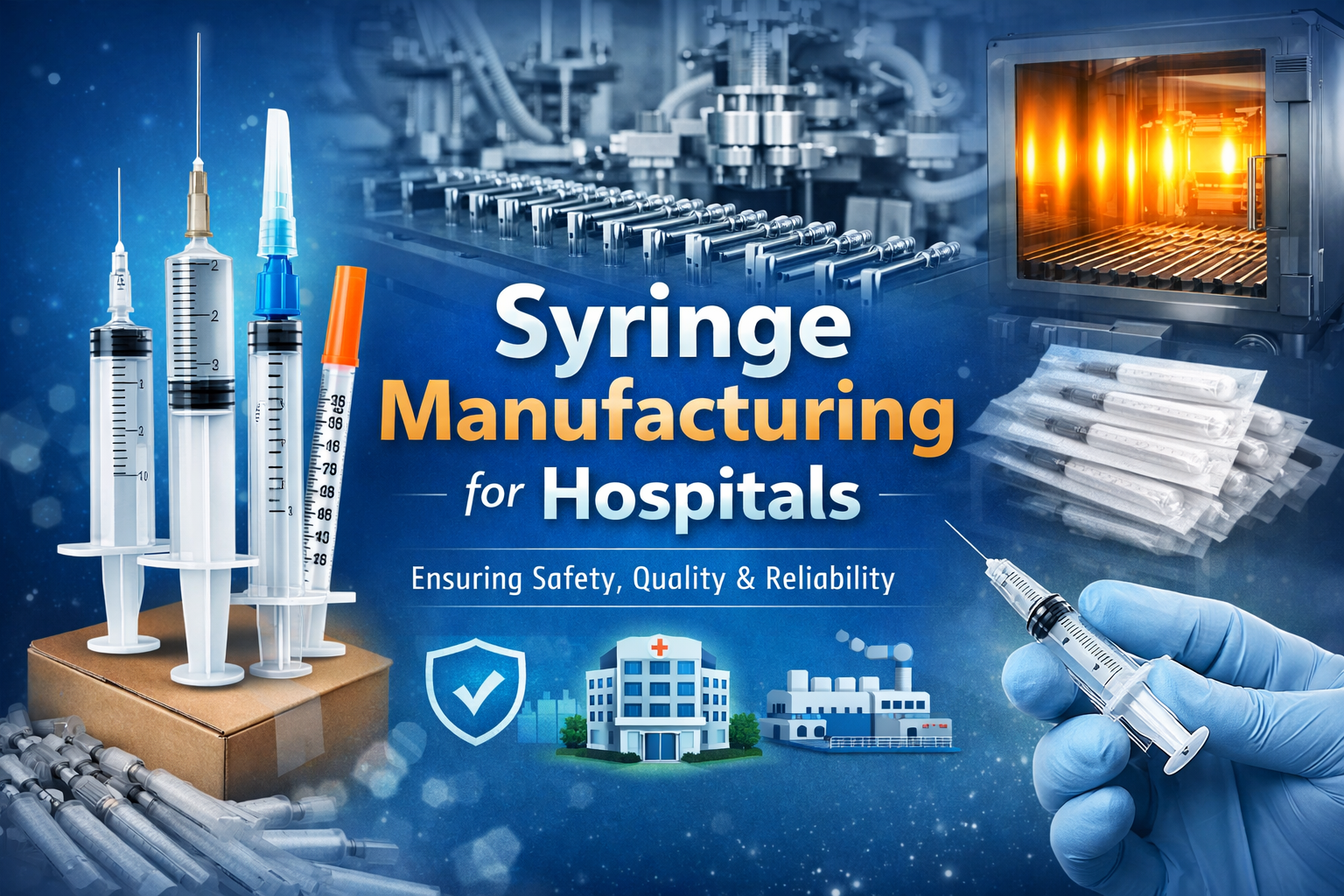
Syringes are one of the most important medical tools used in hospitals around the world. They are directly involved in patient care, whether administering vaccines and medications, drawing blood samples, or performing emergency medical procedures. Because syringes come into direct contact with the human body, hospitals demand the highest standards of safety, quality, and hygiene in syringe manufacturing. Reliable syringe manufacturing for hospitals ensures patient safety, infection control, and uninterrupted medical services.
Why Syringe Manufacturing Is Important for Hospitals
Hospitals use thousands of syringes every single day. Even a small defect in a syringe can lead to serious consequences such as infections, incorrect drug dosage, or injury to patients and healthcare workers. This is why hospitals prefer manufacturers that strictly follow international medical standards and maintain consistent product quality.
Key reasons hospitals need reliable syringe manufacturing
- Constant demand for injections and vaccination programs
- Safe and contamination-free drug delivery
- Prevention of infections through single-use syringes
- Accurate dosage measurement for patient safety
- Support for emergency and critical care situations
Reliable syringe manufacturing ensures hospitals never face shortages and can always maintain high standards of patient care.
Types of Syringes Used in Hospitals
Different hospital departments require different types of syringes. Syringe manufacturers must produce a wide range of products to meet these diverse medical needs.
Common types of syringes used in hospitals
Disposable syringes
Single-use syringes made from medical-grade plastic. These are the most widely used syringes in hospitals to prevent cross-contamination and infections.
Auto-disable syringes
These syringes automatically lock after one use. They are commonly used in vaccination programs and high-risk medical environments.
Insulin syringes
Low-capacity syringes with highly accurate markings, specially designed for insulin administration.
Safety syringes
Equipped with needle-protection mechanisms to reduce the risk of needle-stick injuries among healthcare workers.
Materials Used to Make Syringes
High-quality raw materials are the foundation of safe and effective syringe manufacturing for hospitals.
Main materials used in syringe production
Medical-grade plastic
Polypropylene is commonly used for syringe barrels and plungers because it is strong, transparent, lightweight, and resistant to chemicals.
Stainless steel needles
Syringe needles are made from high-quality stainless steel to ensure sharpness, strength, and resistance to corrosion.
Rubber gaskets
Rubber gaskets allow smooth plunger movement and provide an airtight seal to ensure accurate drug delivery. All materials used in syringe manufacturing must be non-toxic, latex-free, and compliant with medical safety regulations.
Syringe Manufacturing Process for Hospitals
The syringe manufacturing process is highly controlled and automated to ensure safety, consistency, and large-scale production.
Step-by-step syringe manufacturing process
Injection molding
Medical-grade plastic is melted and shaped into syringe barrels and plungers using precision injection moulding machines.
Needle manufacturing
Steel tubes are cut, sharpened, cleaned, and siliconized to ensure smooth penetration and minimal patient discomfort.
Assembly
Barrels, plungers, gaskets, and needles are assembled inside cleanroom environments to prevent contamination.
Sterilization
Syringes are sterilized using methods such as ethylene oxide gas or gamma radiation to eliminate microorganisms.
Packaging
Sterile syringes are sealed in medical-grade, tamper-proof packaging to maintain sterility until use.
Quality Control in Syringe Manufacturing for Hospitals
Quality control is the most critical part of syringe manufacturing for hospitals. Every syringe must meet strict safety and performance standards.
Quality testing methods
Visual inspection
Checking syringes for cracks, deformities, or visible contamination.
Leakage testing
Ensures that no fluid leaks during injection or aspiration.
Dosage accuracy testing
Verifies that volume markings are correct and the plunger moves smoothly.
Sterility testing
Confirms that syringes are free from bacteria and other microorganisms. Only syringes that pass all quality checks are approved for hospital use.
Safety and Regulatory Standards
Syringe manufacturers must comply with national and international medical device regulations.
Important safety and regulatory requirements
ISO certification
Ensures consistent manufacturing quality, risk management, and product safety.
GMP compliance
Good Manufacturing Practices ensure cleanliness, proper documentation, and controlled production processes.
Government and hospital approvals
Manufacturers must meet regulatory authority requirements and hospital procurement standards. Strict compliance with these standards builds trust and protects patient health.
Large-Scale Syringe Manufacturing for Hospital Supply
Hospitals require syringes in large quantities, especially during vaccination drives, disease outbreaks, and emergencies.
Benefits of large-scale syringe manufacturing
- Continuous and uninterrupted hospital supply
- Lower production cost per syringe
- Faster manufacturing and delivery timelines
- Ability to manage sudden demand spikes during emergencies
Large-scale syringe manufacturing plants use automated machinery and high-capacity production lines to meet hospital demands efficiently.
Hospital Syringe Packaging and Logistics
Proper packaging and logistics are essential to maintain syringe sterility during storage and transportation.
Packaging requirements for hospital syringes
- Individually packed sterile syringes
- Clear labeling with batch numbers and expiry dates
- Tamper-proof, medical-grade packaging
Efficient logistics systems ensure timely delivery to hospitals without compromising product quality.
Challenges in Syringe Manufacturing for Hospitals
Despite technological advancements, Syringe manufacturing for hospitals. face several challenges.
Common challenges
- Maintaining consistent quality at high production volumes
- Rising raw material and production costs
- Adapting to changing medical regulations
- Managing sudden demand surges during health emergencies
Manufacturers must invest in advanced technology and strong quality systems to overcome these challenges.
Future Trends in Syringe Manufacturing
The syringe manufacturing industry continues to evolve with innovation and technology.
Emerging trends in syringe manufacturing
Eco-friendly syringes
Development of recyclable and biodegradable materials to reduce medical waste.
Smart syringes
Syringes with tracking and safety features to prevent reuse and improve monitoring.
Automation and AI
Advanced automation and artificial intelligence to improve accuracy and reduce human error.
These innovations will further improve safety, efficiency, and sustainability in hospitals.
FAQs
What does syringe manufacturing for hospitals mean?
It refers to the production of medical-grade syringes that meet hospital standards for safety, sterility, and quality.
Why do hospitals prefer disposable syringes?
Disposable syringes prevent cross-infection and ensure patient safety through single-use design.
What regulations must syringe manufacturers follow?
Manufacturers must comply with ISO standards, GMP guidelines, and national medical device regulations.
How are hospital syringes sterilized?
Common sterilisation methods include ethylene oxide gas and gamma radiation.
Why is large-scale syringe manufacturing important?
Hospitals need a continuous bulk supply to meet daily medical needs and handle emergencies effectively.